How Hard Should Your Accessory Exercises Be?
Accessory exercises should support your squat, bench press, and deadlift, not compete with them. Their purpose is to help build muscle, improve durability, and address weak points. When every set of triceps pushdowns, split squats, or dumbbell rows is taken to failure, the added fatigue can begin to hurt the lifts that matter most for powerlifting performance.
Not every accessory exercise should be trained the same way. Larger, multi-joint movements such as Romanian deadlifts, good mornings, leg presses, hack squats, split squats, and dumbbell presses create more overall fatigue. Most of this work should stay around two to three reps in reserve, or roughly RPE 7–8. Smaller isolation exercises can generally be pushed closer to failure because they place less stress on the body and are less likely to interfere with recovery.
There may be times when it makes sense to push a larger accessory movement harder. For example, you might go for a dumbbell incline or weighted-dip PR at the end of a training block when a deload is coming and your primary work for the week is already finished. Trying to set accessory PRs early in a block, or close to competition, can create unnecessary fatigue, joint stress, or injury risk that disrupts your main training.
The closer you get to a meet, the more your training should prioritize the competition lifts. Larger accessory movements may need to be reduced or replaced with machines and isolation exercises that are easier to recover from. Remember that the final rep before failure is often the most expensive rep in a set. Recovery is a limited resource, so spend it where it matters most. Finishing a workout exhausted does not necessarily mean the session was productive.
Want a program that fixes your weak points for you?
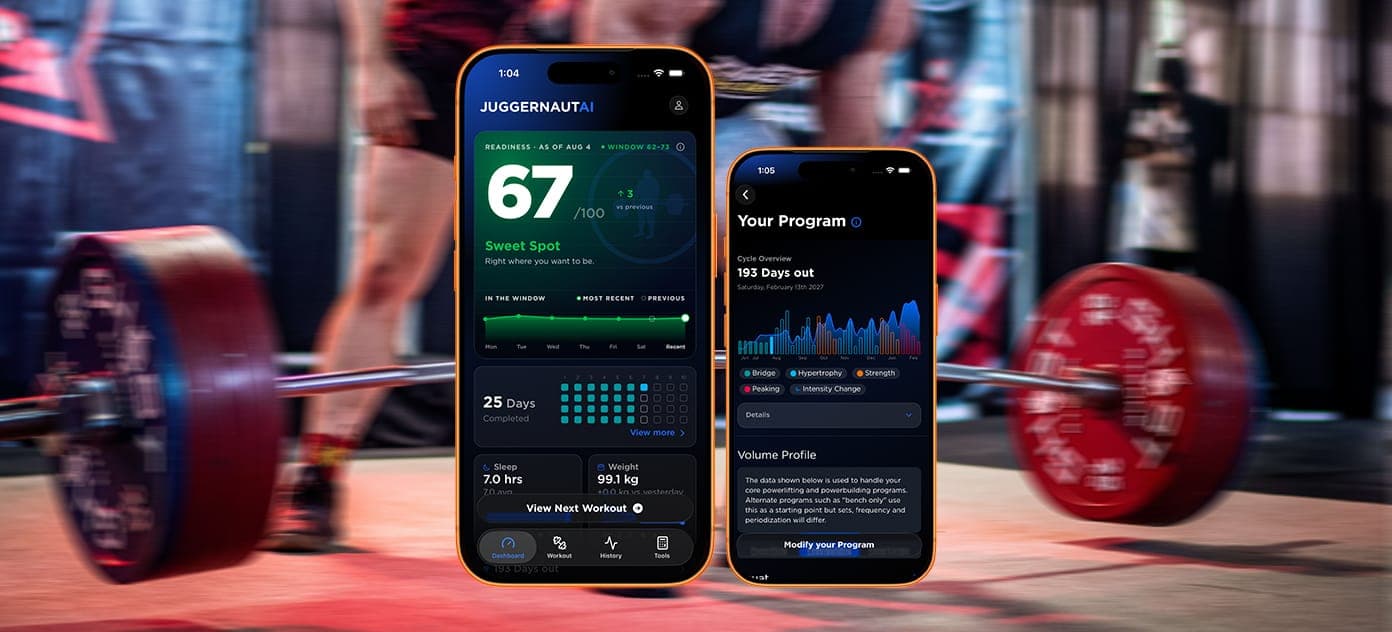
JuggernautAI analyzes every rep you log and targets your sticking points automatically. Try it free for 2 weeks.
View plans